|
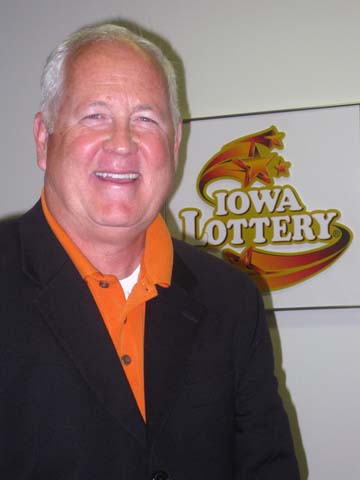
Public Gaming Interviews - Terry Rich, President & Chief Executive Officer of Iowa Lottery
The early returns indicate that the cross-selling of the multi-state jackpot games will be a resounding success. This breakthrough initiative required the participating state lotteries to collaborate in unprecedented ways, looking past all the differences that impede collaboration between states to find the common ground, to break down barriers and forge completely new strategies. One of the challenges was, and continues to be, creating a national approach to branding, marketing, and public relations.
Paul Jason, Public Gaming: Short digression: Facebook. Is it being clarified what the lottery can and cannot do on Facebook?
T. Rich: There is a little confusion over that question. We recently noticed little-known Facebook guidelines about gaming. So we called Facebook to make sure that what we are doing on our page is compliant with their rules. We also asked about what we could do to continue to promote our products via Facebook. People at Facebook are now working on this and we should have some conclusions by the time of our regional NASPL meeting in July. It is a gray area now, and we want it the rules and guidelines be black and white as far as lotteries are concerned.
As you know, there are offshore Internet gambling ventures that would like to use the massive Facebook platform to engage new players. Those and other questionable forms of gambling are what Facebook wants to prohibit. We think that Facebook’s rules are not intended to be against state lotteries, and that the outcome will be positive in allowing lotteries to reach out to our customers on Facebook. Facebook is a relationship-building platform for us. It is more about interacting with our players and not really about gaming or selling lottery tickets. But it’s very important that we relate to our customers in the personal way that social media platforms like Facebook allow. So we very much want to help all of our media partners know and understand lotteries and feel good about who we are and our public service mission.
Your presentation at SMART-Tech NYC focused on ways that lotteries can work together to promote a common agenda on a national scale. I would think that there would be much to gain by working together to create a truly national brand, or at least develop some national marketing campaigns.
Terry Rich: There are lots of formidable obstacles to getting state lotteries to collaborate together. Obviously, lotteries are all required to comply with the will of their state lawmakers. Each state has its own rules and ways of doing things. So there are differences in approaches that affect even the smallest details. Each state has its own rules about what can be said in advertising and marketing messaging in general, and we need to respect those.
And yet, the games are a national story. It is important that we stretch to find the common ground, focus on those common interests, and create the unified approach that will make our products and brands more powerful. Think about what an incredibly exciting story we have to tell and how much more meaningful it would be if we could create a national stage to tell it. I’m not suggesting that we collaborate on everything, since that’s not possible. But, we can start small and collaborate in ways that are possible.
Think of the tremendous brand that lotteries have. If you add up the brand recognition of all the state lotteries along with Powerball, Mega Millions, and the regional games, you have a reach and market penetration that exceeds almost anything out there. Let’s appreciate and recognize the tremendous asset we have in our brand to touch tens of millions of customers. Then let’s ask how we are leveraging that asset for maximum value to our stakeholders. The revenues that the business generates are high and the job that is being done with the products we sell is certainly respectable. But our Lottery brand and our story are greatly underutilized assets. It would be like Apple or IBM stopping with just one or two products, or General Mills selling only cereal, or Proctor and Gamble selling only detergent. It’s true that we do not have the flexibility to diversify and leverage our brand value in exactly the same ways those companies do. But that doesn’t mean there aren’t more creative ways to accomplish more than we are.
We’re already collaborating with brand licensing relationships. And the breakthrough with the National Football League is also a step in the right direction. I’m thinking, though, that we can do much more. Let’s look at national brands that have the potential to be distributional partners as well as just brand licensing partners. Coca-Cola, Apple Computer and Hallmark Cards are national brands but are controlled and distributed locally and are set up to conform to individual state laws. Like these iconic brands, state Lotteries have a special relationship with tens of millions of customers and also have the distributional infrastructure to reach these customers in ways that nobody else has. Why can’t we explore ways to collaborate on special promotional campaigns that leverage not just our brand recognition but also the distributional power of lotteries, which rivals that of those corporate powerhouses?
We’ve done that to a limited extent with Universal Studios from the Powerball side. But I think that collaboration on Powerball, Mega Millions, and other lotto brands will most likely begin not on the paid advertising side, but on the public relations side. There are two reasons for that. First, it is hard to get all the states to agree to contribute financially to a national advertising campaign. So we need to find ways to accomplish these goals that do not require much funding. That’s not necessarily as hard as it might seem. We have something of value in our brand and distributional infrastructure that can be traded for like value from the corporate side. For example, a national promotion where you could buy a twelve pack of Coke for $2.99 by using your non-winning Powerball ticket adds value, branding and third-party endorsement of our product.
Most importantly to recognize, we hit critical mass with the cross-selling initiative. And when you hit critical mass, other name brands will stand up and pay attention. The value of what we have is recognized now more than ever. So let’s look at the PR angle.
Creating a bigger, more national story out of all multi-state jackpot winners would seem to be a “low-hanging fruit” opportunity.
T. Rich: Bingo. Each state gets a nice bump after one of its own wins a big jackpot, right? Why should it be localized like that? Why can’t we do more to create that same positive feeling across the entire country? The story of that winner really belongs to all of us, not just the one state where the winner resides. Obviously, the potential to win a lotto jackpot is equal for everyone and promoting the national angle helps all lotteries, including the state where the last lottery winner resides. So why can’t we spread the good news in ways that engage everyone everywhere instead of only benefiting the one state where the winner happens to live? The story of lottery and lottery winners should really be a national story.
We can do much more to gain national PR attention. Our product is unique for its ability to generate interest and excitement from a purely public interest point of view. We are all keenly aware of how a story can go national and affect us in negative ways. How often do questions or controversy percolate up from the local level to the national media and affect all of us? We can use that same dynamic to affect the national consciousness in a positive way. Let’s look for, or create, the story angles that are interesting and bring them to the attention of those who can help us forge a national sense of who and what state lotteries are all about. Any time that Good Morning America or David Letterman mentions Powerball, any time we can get just the mention itself in the national media, it is worth millions of dollars to all of us.
Any examples of how this has worked in the past?
T. Rich: Sure. Remember the South Dakota cowboy, just 23 years old and of modest means, who won the lottery last year? Granted, this story did have lots of material to make it fun and interesting. Anyway, the story went national, global really, and everyone got to enjoy the image of this young man in the big black cowboy hat whose life was transformed in the most amazing way. He even bought the winning ticket in a town called “Winner”! Some stories are just made to go national no matter what you do, or don’t do, to make it happen. What we need to do, though, is look for the story angles of all events and winners, reframe them for national consumption, and then get them into the hands of the right people to make it happen. We can’t just sit and hope that the national media picks up on something. We can and should take responsibility ourselves for making it happen, just like any business our size would do.
As soon as we saw the story of the South Dakota cowboy, the Iowa Lottery bought cowboy hats for everybody in the office, went out to the State Fair to sell tickets and used the positive imaging created in South Dakota to help us sell tickets in Iowa. It cost us very little and yet we all remember it. So if we have a national firm look for the angle, look for the media hook that will get people’s attention, and then promote that positive message ourselves, we can help to direct how our lotteries and our businesses are being covered by the national media. Let’s be proactive at shaping the media messaging in a positive way rather than waiting to react to whatever the media thinks is newsworthy.
Would the obstacle be allocating funds to promote the product outside the borders of the state?
T. Rich: Yes. But we have the ability to accomplish a lot through simple stunts and promotions and perhaps spending a small amount for a professional PR firm to bring our story to the national media, to find better ways of just elbowing our way into a place at the table of national news. We just need to find or create PR opportunities to touch national media outlets. It does require some funding. GTECH stepped up to help by funding a PR agency for the launch of the cross-selling. We had great success with that. It’s a start, but we would be so far ahead if we had started 10 or 15 years ago to do this. But it was a breakthrough step in that it provided a common messaging that local states could use as they wished. Most did use it because we tried to create the messaging in ways that effectively addressed the questions most likely to be asked by the local media. That’s often what great PR and messaging is all about - just having it available to use as you need it. Obviously, everyone could modify it to be consistent with their own agenda and messaging objectives. This applies to damage control as well – being prepared with the most effective messaging to respond quickly to crises and the public’s need to know what we have to say. Half the battle in good messaging for a brand is being prepared with articulate and knowledgeable answers rather than trying to respond off the cuff to reporters’ questions. And, in our state lottery business, when one of us responds to queries from national media, we are speaking for the entire community of state lotteries, whether we think we are or intend to or not. It would be far better for us to have a system for managing those media relations from a national perspective, managing for the purpose of optimizing the upside value of positive news like a jackpot winner and minimizing the downside impact of negative stories.
It would seem like the benefits to coordinating a more national approach to brand management and at least some aspects of messaging and PR are compelling. Obstacles to this include the availability of resources to fund this kind of thing.
T. Rich: Yes. In the short term, our commercial partners have helped and are probably the most expedient venue to move this effort forward. But even when the states do not pay for something like this directly, some states have rules against a supplier to whom they have paid money in turn paying for something that has not been approved by the state. That can get a little messy, unfortunately. But I think the door is now open because the success of cross-selling reveals to everyone just what a tremendous opportunity we have if we could be open to working together. We all appreciate the need to respect the rights of each state to protect its interests in everything it does. But we also hope that everyone sees the tremendous potential to deliver so much more to our beneficiaries if we work hard to break down the barriers that separate us, find ways to resolve differences, work together, and create a unified approach to advancing our agendas on a national stage. I’d like to think the opportunity to do this is better now than ever and we should act boldly to take advantage of it.
Why couldn’t the cost for PR and national marketing be built into the overall deal for a lottery to sell the multi-state game? There are other costs involved with operating the game that need to be paid, and each licensee pays its share. Why not just build in a budget for national PR and marketing and require each participant to pitch in as part of the overall operational expenses? It doesn’t seem like a solid game plan to wait for somebody like the New York Lottery to pay for a Super Bowl ad or a commercial partner like GTECH to donate the money. That process almost incentivizes states to not contribute since others might end up paying for it anyway. Why not just make participation a business expense and have the licensing deal include a budget for national advertising and PR? You’re either in or out.
T. Rich: That is certainly one approach and may be a good one. It would be tough to rewrite the terms of existing games. But maybe that could be considered for new games, like the new premium game that U.S. lotteries are currently discussing. The agreement to sell the game requires that each participating lottery agree to terms and conditions of all different kinds. One of those could be that a specified fraction of a percentage of revenues be allocated towards a national advertising and PR campaign. There will be many people who read this and see red because there are lots of complications to the idea. As we’ve just discussed, the messaging rules differ from state to state, and some states may have rules that would appear to prohibit marketing expenditures that go outside of the state. But I would suggest that we should be looking for solutions, looking for ways to break through the obstacles and find ways to progress. We’re all aware that each state has rules that command respect. But hopefully everyone is also keen on overcoming obstacles that prevent us from truly maximizing the benefits we produce for our stakeholders and good causes. It’s easy to point out obstacles to doing what we know is right. What we need is the desire and integrity to push hard, find solutions, communicate with our political constituents and get the support we need. A vital part of our story is the tremendous public service function that lotteries perform. Our pride in that should inform and drive our ability to share our convictions with our political constituents.
You launched Mega Millions in January. With Powerball, that makes two big multi-state jackpot games, plus the regional Hot Lotto, plus your own in-state lotto game, Iowa’s $100,000 Cash Game. What are the results so far this year?
T. Rich: I think that almost all lottery directors concur that the results so far are excellent. It has only been a couple months, so we do need to be cautious about extrapolating those short-term numbers into a 12- or 18-month projection. But most of us seem to have enjoyed the best of both worlds. The Mega Millions group got an exciting introduction to Powerball because two or three really good runs attracted some new players to try Powerball early on. And everyone, including the Powerball states, has generally seen a total lotto increase. Nobody was quite sure how this would impact the rest of the portfolio and whether there would be much cannibalization with players just shifting their spending from one product over to the new jackpot game. We are very pleased to see that phenomenon does not seem to be occurring to any great extent. The situation has been helped by having high Powerball jackpots to keep the regular core player engaged. We expect the next big bump to come as Mega Millions takes a run at a big jackpot and gets the attention of new players. It’s worked out well for the smaller states that were concerned about Powerball being cannibalized to have Powerball getting attention with its big jackpot runs soon after cross-selling began. Now we’re ready for Mega Millions to take a run and are confident that it will contribute incrementally to sales with minimal cannibalization.
There would seem to be a lot of similarities between these two multi-state super-jackpot games. But it does not seem like much attention was given to differentiate the products.
T. Rich: There are a couple reasons for that. First and foremost, both the players and the operators have some history with this basic business model. Let’s look back to the era when only one scratch ticket was sold and there was concern about saturating the market if a second was launched. Of course, it didn’t happen that way. There is plenty of room for more than one product, even without market segmentation and pronounced product differentiation. The sales of the first scratch ticket may well have dipped a little back then, but together the two tickets sold a lot more. And that’s exactly what the business model for these two jackpot games is progressing towards. Two jackpot games simply means more chances to win and that will incline the player to spend a little more and make the entire tide rise. Following along with this same business model, we didn’t stop at just two scratch games and likewise the market could easily absorb another big jackpot game. The next step will likely be what we call a ‘premium game’, which will have a higher price point, likely a $5 ticket. Some people will like the $5 ticket and some will prefer the $1 ticket, so we need to give them a choice. We don’t feel the need to differentiate in major ways. To some extent, the brand and different price points may provide adequate product differentiation.
Another reason why we may not want to go for bold product differentiation is that we want to use price points to distinguish between the games. Again, we’re following the model of the scratch tickets. We want the brands to be distinct but not really competitive with each other. Instead, we want the player to affiliate with differing price points more than other attributes which perhaps could have been integrated into the games. We need to have higher price points for lotto like we do for scratch-offs.
You seem to be saying that innovation is not necessarily always a good thing; that there are lots of things to consider and change of any kind has lots of unintended consequences.
T. Rich: We talk about how important innovation is, and how lotteries need to evolve to keep up with the times, etcetera. But it is also important to recognize that the objectives of innovation can be quite different depending on the product life-cycle stage. In the launch or entrepreneurial stage, innovation is a core attribute that will drive growth. The business model can be based on high product development and marketing costs that produce dramatic innovation because you’re banking on high growth. You hope that it is profitable and it better be profitable because it includes uncertainties and higher risk. That’s not the product life-cycle stage that lotto is in. We don’t necessarily want to reinvent our super-jackpot products. They may be in the mature stage of the life cycle, but the way to manage them for maximum profitability is to innovate them back into the late-growth stage and not to try to recapture that early high-growth stage by reinventing the product, or by introducing dramatic changes to differentiate the products. We know we need to innovate to keep the products exciting and relevant to the player, but we do not want to go the high-risk, high-return route of completely changing our core products.
You want to appreciate that lotto is a very successful and profitable franchise. Our primary obligation is to protect the security and integrity of that franchise for the good causes that are our beneficiaries. The launch of both super-jackpot games is a hugely exciting innovation and we’ll be very pleased and proud to see double-digit increases in sales. That in itself is pretty darn good. But it’s not our mission to take high risks and gun for outsized results. So I would say that we are just as pleased and proud of the measures we take to minimize downside risks for all our stakeholders. We were confident that this would be successful, and our commercial partners have done an excellent job at executing. But again, the operative term regarding the cross-selling initiative continues to be ‘cautiously optimistic’.
Short-term results would seem to indicate that can be upgraded to “quite confidently optimistic”. How exciting it must be to deliver sales and profit increases in an economic climate that is so challenging. Do you think the success of the cross-selling might cause state legislators to look more favorably on allowing lotteries to have more flexibility in the ways they manage the business and perhaps authorize more games and otherwise support your ability to increase funding for good causes?
T. Rich: Not in quite the way you are thinking about it. Of course, everyone loves the revenues. But I don’t think it will cause legislators to change the conservative approach they have towards the lottery. In fact, we all need to continue to emphasize that our job is not just about promoting the games and increasing revenues. It is about managing a great business that balances social responsibility along with the entertainment desires of the public and the much-needed revenues that states desire in these economic times. |








 State legislatures everywhere are turning to their lotteries to help solve financial deficits. The California Legislature recently approved changes that give the Lottery more flexibility to manage the business for peak performance and profitability. It’s not just about increasing the prize-payout percentage. It’s about setting ambitious goals, and then managing the lottery like a business to produce superior results. In an accompanying article, Director Borucki describes the impact of this new legislation. Below, the Director goes into more detail about the meaning of performance management, the Renew project, the Lottery’s three-year business plan, and the role that the Camelot Group plays in that plan.